Digital Security and Forensics
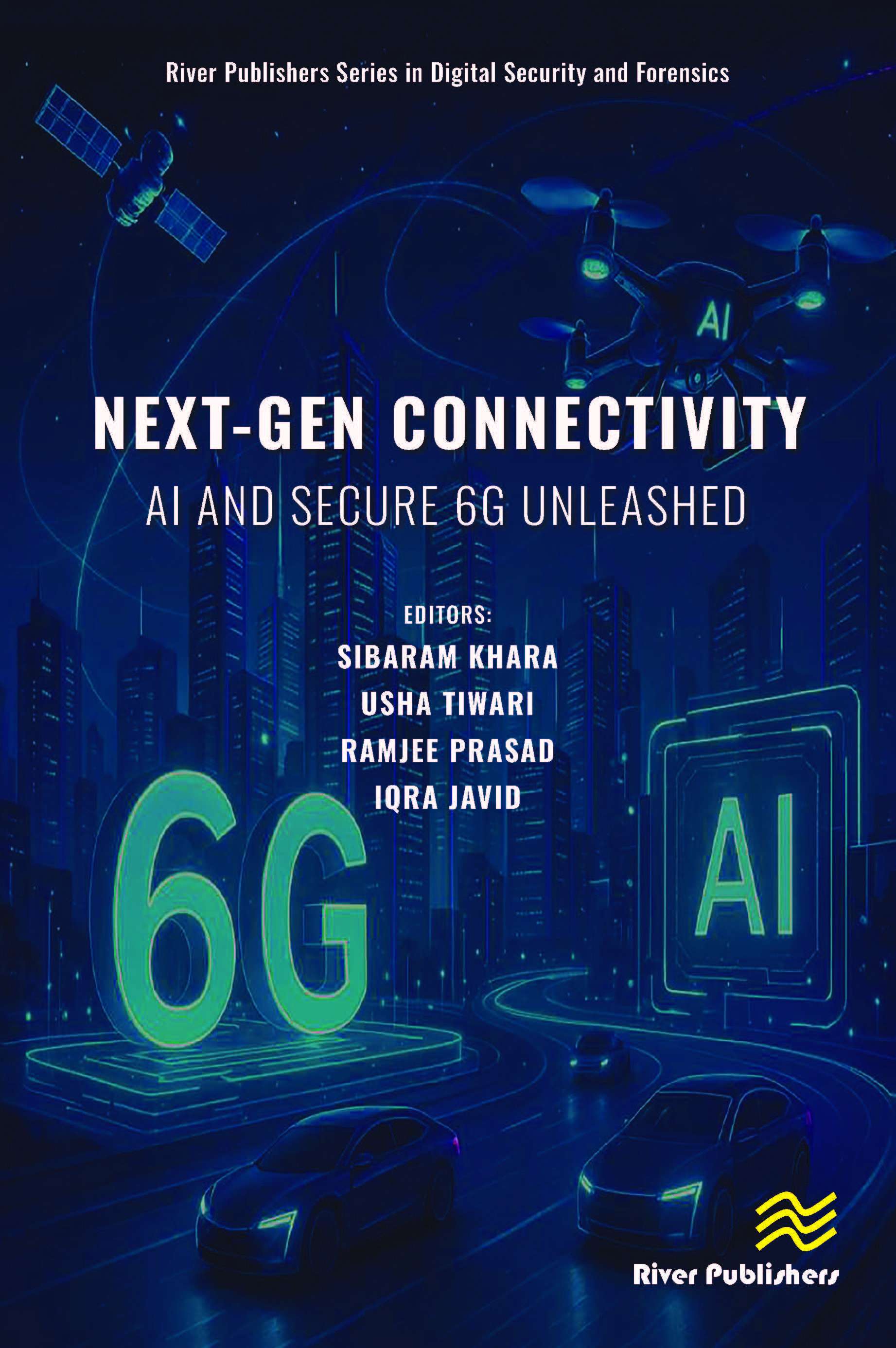
Next-Gen Connectivity
AI and Secure 6G Unleashed Forthcoming
Editors:
Sibaram Khara, Sharda University, Greater Noida, India
Dr. Usha Tiwari, Sharda University, Greater Noida, India
Prof. Dr. Ramjee Prasad, CTIF Global Capsule (CGC), Denmark
Iqra Javid, Sharda University, Greater Noida, India
ISBN: 9788743815778 (Hardback) e-ISBN: 9788743815785
Available: December 2026
Next-Gen Connectivity: AI and Secure 6G Unleashed explores the technologies driving the evolution of intelligent communications beyond 5G. Bringing together advances in AI-enabled 6G networks, cybersecurity, blockchain, quantum technologies, satellite communications, machine learning, intelligent transportation, and sustainable digital infrastructure, this book provides a comprehensive view of the innovations shaping tomorrow's connected world.
As communication networks become increasingly autonomous, data-driven, and interconnected, the need for secure, resilient, and intelligent connectivity has never been greater. This volume examines the architectures, protocols, and enabling technologies that support trusted digital ecosystems while addressing critical challenges in cybersecurity, privacy, network intelligence, autonomous systems, the Internet of Things (IoT), and intelligent infrastructure.
Contributors present cutting-edge research alongside practical perspectives on designing scalable, human-centric communication networks capable of supporting emerging applications across industry, government, and society. By integrating advances in artificial intelligence with next-generation wireless technologies, the book highlights how secure 6G will transform the way people, devices, and systems communicate.
Designed for researchers, graduate students, engineers, and technology professionals, Next-Gen Connectivity: AI and Secure 6G Unleashed serves as both a comprehensive reference and a forward-looking guide to the technologies, challenges, and opportunities defining the future of global communications.
|
Preface |
xiii |
|
List of Contributors |
xvii |
|
List of Figures |
xxi |
|
List of Tables |
xxv |
|
List of Acronyms |
xxvii |
Â
|
1 |
Evolution of Modulation Techniques from 1G to 6G: State of the Art Kalyani Barje, Vandana Rohokale, Ramjee Prasad |
1 |
|
 |
1.1Â Â Â Â Â Â Evolution of Wireless Communication |
2 |
|
 |
1.2Â Â Â Â Â Â Role of Modulation Schemes in Evolution of Wireless Technologies |
3 |
|
 |
           1.2.1   First Generation (1G) |
3 |
|
 |
           1.2.2   Second Generation (2G) |
4 |
|
 |
           1.2.3   Third Generation (3G) |
5 |
|
 |
           1.2.4   Fourth generation (4G) |
6 |
|
 |
           1.2.5   Fifth Generation (5G) |
12 |
|
 |
1.3Â Â Â Â Â Â Comparison of technologies 1G to 6G |
16 |
|
 |
1.4Â Â Â Â Â Â Summary |
16 |
|
 |
References |
18 |
|
2 |
Navigating Security, Privacy, and Ethical Challenges in WhatsApp Communication Rajashree Sharma Adhikary, Sibaram Khara |
21 |
|
 |
2.1 Â Â Â Â Â Introduction |
22 |
|
 |
2.2 Â Â Â Â Â Review of Literature |
23 |
|
 |
2.3Â Â Â Â Â Â Methodology |
25 |
|
 |
2.4Â Â Â Â Â Â Results |
26 |
|
 |
2.5Â Â Â Â Â Â Analysis |
27 |
|
 |
           2.5.1   Demographic Overview |
27 |
|
 |
           2.5.2   Awareness of Security Features |
27 |
|
 |
           2.5.3   Privacy Concerns |
28 |
|
 |
           2.5.4   Ethical Considerations |
29 |
|
 |
           2.5.5   Broader Implications and User Concerns |
30 |
|
 |
2.6 Conclusion |
31 |
|
 |
References |
31 |
|
3 |
Security, Privacy Using 6G: Where Technology Meets Humanity in XR Mrs. Supriya Jaiswal, Akhouri Anand Kumar |
35 |
|
 |
3.1Â Â Â Â Â Â Introduction |
36 |
|
 |
           3.1.1   Overview of 6G Technology |
37 |
|
 |
           3.1.2   Enhanced Connectivity |
37 |
|
 |
           3.1.3   Low-Latency Communication |
37 |
|
 |
           3.1.4   Advanced Spectrum Utilization |
37 |
|
 |
           3.1.5   Integration of AI and Machine Learning |
37 |
|
 |
           3.1.6   Enhanced Security and Privacy |
37 |
|
 |
           3.1.7   Environmental and Energy Efficiency |
38 |
|
 |
           3.1.8   Applications and Impact |
38 |
|
 |
3.2 Â Â Â Â Â Literature Survey |
38 |
|
 |
3.3Â Â Â Â Â Â Widespread Impact of 6G Technology in XR |
40 |
|
 |
3.3.1Â Â Â Enhanced Security in Virtual Environments |
40 |
|
 |
3.3.2Â Â Â Real-Time Threat Detection and Response |
41 |
|
 |
3.3.3Â Â Â Safe Remote Assistance and Training |
41 |
|
 |
3.3.4Â Â Â Secure Data Transmission for Critical Applications |
41 |
|
 |
3.3.5Â Â Â Enhanced Privacy Controls in Immersive Environments |
41 |
|
 |
3.3.6Â Â Â Top 5 Use Cases for 6G in XR: Safety and Security Applications |
43 |
|
 |
3.4.1   Latency and Bandwidth Limitations in XR Development Over       Successive Network Generations |
33 |
|
 |
3.4.2Â Â Â Key Insights |
44 |
|
 |
3.4.3Â Â Â Significance for XR |
44 |
|
 |
3.4.4Â Â Â Graph Elements |
45 |
|
 |
3.5Â Â Â Â Â Â XR Edge-Processing Architectures |
45 |
|
 |
3.5.1Â Â Â Edge-Processing Offload Models |
46 |
|
 |
3.5.2Â Â Â The Role of 6G and Edge AI in XR |
46 |
|
 |
3.6Â Â Â Â Â Â How 6G Will Transform XR |
47 |
|
 |
3.6.1Â Â Â The 6G Impact on XR Systems |
47 |
|
 |
3.6.2Â Â Â Pushing the Boundaries of XR in Classroom Education |
48 |
|
 |
3.6.3Â Â Â How XR is Powering Industry 4.0 |
49 |
|
 |
3.7Â Â Â Â Â Â How 6G Will Benefit Enterprise Extended Reality (XR) |
50 |
|
 |
3.7.1Â Â Â What is Enterprise XR? |
50 |
|
 |
3.7.2Â Â Â Use Cases of 6G for Enterprise XR |
50 |
|
 |
3.7.3 Benefits of 6G for Enterprise XR |
51 |
|
 |
3.7.4Â Â Â Immersive 6G Virtual Reality Skill-Based Safety Training in XR |
52 |
|
 |
3.7.5Â Â Â Key Technological Advantages of 6G for Safety Training in XR: |
52 |
|
 |
3.7.6Â Â Â The 6G Era and the Future of Immersive XR |
53 |
|
 |
References |
54 |
|
4 |
Analysis of Different Clustering Techniques Applied to Multi Beam Satellites Shwet Kashyap, Nisha Gupta |
57 |
|
 |
4.1Â Â Â Â Â Â Introduction |
57 |
|
 |
4.2Â Â Â Â Â Â Main Text |
59 |
|
 |
           4.2.1   Problem Statement |
59 |
|
 |
           4.2.2   Comparison of Clustering Techniques |
59 |
|
 |
           4.2.3   Results and Discussion |
63 |
|
 |
4.3.     Conclusion |
65 |
|
 |
4.4Â Â Â Â Â Â Acknowledgements |
66 |
|
 |
References |
66 |
|
5 |
Architecture, Characteristics, Applications and Challenges in Vehicular Ad Hoc Networks Mrs. A. C. Pise, Dr. K. J. Karande |
69 |
|
 |
5.1Â Â Â Â Â Â Introduction |
70 |
|
 |
5.2Â Â Â Â Â Â Characteristics of VANETs |
72 |
|
 |
5.3Â Â Â Â Â Â Applications of VANET |
74 |
|
 |
5.4Â Â Â Â Â Â Challenges of VANETs |
76 |
|
 |
5.5Â Â Â Â Â Â Securities in VANETs |
77 |
|
 |
5.6Â Â Â Â Â Â Conclusion |
79 |
|
 |
5.7Â Â Â Â Â Â Acknowledgements |
80 |
|
 |
References |
80 |
|
6 |
Quantum Robots: Insights into Architectural Components and Algorithms S. Chavan, A. Deshmukh, N. Chankhore |
83 |
|
 |
6.1Â Â Â Â Â Â Introduction |
83 |
|
 |
           6.1.1   Objectives |
84 |
|
 |
           6.1.2   Scope |
85 |
|
 |
6.2Â Â Â Â Â Â Methodology |
86 |
|
 |
           6.2.1   Search Strategy |
86 |
|
 |
6.3Â Â Â Â Â Â Quantum Robot Structure |
86 |
|
 |
           6.3.1   Definition and Architecture |
86 |
|
 |
           6.3.2   Structure Components |
88 |
|
 |
           6.3.3   Comparative Analysis of Structure |
89 |
|
 |
6.4Â Â Â Â Â Â Quantum Algorithms for robots |
90 |
|
 |
           6.4.1   Quantum Search Algorithms |
90 |
|
 |
           6.4.2   Quantum Neural Networks |
90 |
|
 |
           6.4.3   Quantum Reinforcement Learning (QRL) |
91 |
|
 |
           6.4.4   Quantum Optimization Algorithms |
91 |
|
 |
           6.4.5   Quantum Genetic Algorithms (QGAs) |
91 |
|
 |
           6.4.6   Comparative Analysis of Algorithms |
92 |
|
 |
6.5Â Â Â Â Â Â Future Direction and Challenges |
92 |
|
 |
6.6Â Â Â Â Â Â Conclusion |
93 |
|
 |
References |
93 |
|
7 |
Water Quality Monitoring using LPWAN Wireless Sensor Network Vishok Kumar Singh |
95 |
|
 |
7.1Â Â Â Â Â Â Introduction |
95 |
|
 |
7.2Â Â Â Â Â Â Methodology |
96 |
|
 |
7.2.1Â Â Â Presentation of the LoRa module and characterization of sensors |
96 |
|
 |
           7.2.2   Design and commissioning of the functional prototype |
101 |
|
 |
           7.2.3   Graphical interface design for displaying the prototype data. |
101 |
|
 |
7.3Â Â Â Â Â Â Conclusions |
103 |
|
 |
7.4Â Â Â Â Â Â Acknowledgement |
103 |
|
 |
References |
103 |
|
8 |
Comprehensive Analysis of Adversarial Poisoning Attacks in Machine Learning Aman Kumar Gupta |
105 |
|
 |
8.1Â Â Â Â Â Â Introduction |
106 |
|
 |
           8.1.1   Data poisoning attack overview |
107 |
|
 |
           8.1.2   Manipulating Training Data |
108 |
|
 |
           8.1.3   Feature Poisoning |
108 |
|
 |
           8.1.4   Model-Based Poisoning |
109 |
|
 |
           8.1.5   Additional Considerations |
109 |
|
 |
8.2Â Â Â Â Â Â State of The Art |
110 |
|
 |
8.3Â Â Â Â Â Â Experiment Environments |
111 |
|
 |
           8.3.1   Synthetic Data Generation |
111 |
|
 |
           8.3.2   Real-world Datasets |
112 |
|
 |
           8.3.3   Simulated Attack Scenarios |
112 |
|
 |
           8.3.4   Open-Source ML Libraries |
112 |
|
 |
8.4.     Discussion And Future Directions |
113 |
|
 |
           8.4.1   Evolving Attack Landscape |
113 |
|
 |
           8.4.2   Data Privacy vs. Security |
113 |
|
 |
           8.4.3   Scalability and Efficiency |
114 |
|
 |
8.5Â Â Â Â Â Â Future Work |
114 |
|
 |
8.6Â Â Â Â Â Â Conclusion |
115 |
|
 |
8.7Â Â Â Â Â Â Acknowledgements |
116 |
|
 |
References |
116 |
|
9 |
The Impact of Climate Change on Pollen Allergies in Houston: A Data-Driven Analysis Hitesh Singh, Vivek Kumar, Veer Garg, Ramjee Prasad |
121 |
|
 |
9.1Â Â Â Â Â Â Introduction |
122 |
|
 |
9.2Â Â Â Â Â Â Proposed Work |
122 |
|
 |
9.3Â Â Â Â Â Â Results and Discussion |
123 |
|
 |
9.4Â Â Â Â Â Â Conclusion |
131 |
|
 |
References |
132 |
|
10 |
Classification and Analysis of Object Detection Methods for Autonomous Vehicles Sharmistha Dey, Kuldeep Chouhan |
135 |
|
 |
10.1Â Â Â Â Introduction |
135 |
|
 |
           10.1.1 The classification of objects |
136 |
|
 |
10.2Â Â Â Â Literature Survey |
137 |
|
 |
10.3Â Â Â Â Search criteria and Proposed methodology |
138 |
|
 |
           10.3.1 Strategy for Conducting the Search |
141 |
|
 |
           10.3.2 Inclusion criteria |
141 |
|
 |
           10.3.3 Proposed Methodology |
142 |
|
 |
10.4Â Â Â Â Results and Analysis |
142 |
|
 |
10.5Â Â Â Â Conclusion and Future Scope |
146 |
|
 |
10.6Â Â Â Â Acknowledgements |
146 |
|
 |
References |
146 |
|
11 |
Blockchain-Based Soft Drink Authentication with VeChain: Enhancing Consumer Trust Fowambeng Christian Mbomun, Shelja Sharma |
151 |
|
 |
11.1Â Â Â Â Introduction |
151 |
|
 |
11.2Â Â Â Â Literature Survey |
154 |
|
 |
           11.2.1 Blockchain Technology in Supply Chain Management |
154 |
|
 |
           11.2.2 Blockchain for Anti-Counterfeiting |
155 |
|
 |
           11.2.3 VeChain and Its Applications |
155 |
|
 |
           11.2.4 Consumer-Driven Verification and Trust |
155 |
|
 |
           11.2.5 Challenges in Blockchain Implementation |
156 |
|
 |
           11.2.6 Gaps in Current Research |
156 |
|
 |
11.3Â Â Â Â Â Â Distinctive Aspects of VeChain for Combatting Counterfeits in the Beverage Sector |
156 |
|
 |
11.4Â Â Â Â VeChain Implementation |
159 |
|
 |
           11.4.1 Pseudo Code |
159 |
|
 |
           11.4.2 Implementation Details |
163 |
|
 |
11.5Â Â Â Â Â Â Challenges and Limitations in Implementing Vechain for Soft Drink Authentication |
163 |
|
 |
           11.5.1 Technological Integration and Data Consistency |
164 |
|
 |
           11.5.2 IoT Infrastructure for Real-Time Data Tracking |
164 |
|
 |
           11.5.3 Regulatory Compliance and Consumer Privacy |
164 |
|
 |
11.6Â Â Â Â Case Studies |
165 |
|
 |
11.7Â Â Â Â BMW - Car Maintenance and Parts Authenticity |
167 |
|
 |
11.8Â Â Â Â VeChain on Large-Scale Operations |
167 |
|
 |
11.9Â Â Â Â Future Trends and Directions |
170 |
|
 |
11.10Â Â Conclusion |
170 |
|
 |
References |
171 |
|
12 |
A Deep Learning based Approach for Traffic Motions Management Sonal Chaudhary, Mridul Hemrajani, Yash Chauhan, Mohd.Kashif, Dharm Raj, Amrit Kumar Agrawal |
175 |
|
 |
12.1Â Â Â Â Introduction |
175 |
|
 |
12.2Â Â Â Â Literature Review |
178 |
|
 |
12.3Â Â Â Â Main Text |
178 |
|
 |
           12.3.1 Data Collection |
178 |
|
 |
           12.3.2 Model Architecture |
182 |
|
 |
12.4Â Â Â Â Implementation |
183 |
|
 |
12.5Â Â Â Â Result |
185 |
|
 |
12.6Â Â Â Â Conclusion |
188 |
|
 |
References |
188 |
|
13 |
Design and Simulation of an O-Slotted Microstrip Patch Antenna for 6G Applications Touko Tcheutou Stephane Borel, Rashmi Priyadarshini |
191 |
|
 |
13.1Â Â Â Â Introduction |
191 |
|
 |
13.2Â Â Â Â Design Process of the Antenna |
193 |
|
 |
13.3Â Â Â Â Results and Discussion |
194 |
|
 |
13.4Â Â Â Â Conclusion |
199 |
|
 |
13.5Â Â Â Â Acknowledgements |
200 |
|
 |
References |
200 |
|
14 |
Decentralized Consensus and Control for Autonomous Vehicles Sachin Soni, Manzoor Ansari, Syed Arshad Ali |
203 |
|
 |
14.1Â Â Â Â Introduction |
203 |
|
 |
14.1.   Background |
204 |
|
 |
14.2Â Â Â Â Related Work |
204 |
|
 |
           14.2.1 Distributed Consensus Algorithms |
204 |
|
 |
           14.2.2 Decentralized Control Systems |
205 |
|
 |
           14.2.3 Communication Protocols and Technologies |
205 |
|
 |
14.3Â Â Â Â Proposed Methodology |
206 |
|
 |
           14.3.1 Distributed Consensus Algorithms |
206 |
|
 |
           14.3.2 Decentralized Control Systems |
207 |
|
 |
           14.3.3 Communication Protocols |
208 |
|
 |
           14.3.4 Integration and System Architecture |
208 |
|
 |
           14.3.5 Implementation |
209 |
|
 |
           14.3.6 Anticipated Results |
210 |
|
 |
14.4Â Â Â Â Discussion |
211 |
|
 |
14.5Â Â Â Â Conclusion |
213 |
|
 |
14.6Â Â Â Â Acknowledgements |
214 |
|
 |
References |
214 |
|
15 |
MindSculpt Adaptive Architecture: Empowering Human-Centered Learning Beyond 2050 with AI, Secure 6G, and Sustainable Education Vivek Ahuja, Vandana Rohokale, Neeli Prasad, Ramjee Prasad |
217 |
|
 |
15.1Â Â Â Â Introduction |
218 |
|
 |
15.2Â Â Â Â Main Text |
219 |
|
 |
           15.2.1 Technology Landscape Beyond 2050 |
219 |
|
 |
           15.2.2 Educational Framework and Challenges |
219 |
|
 |
           15.2.3 Innovative Tools and Methodologies |
221 |
|
 |
15.2.4Â Â Â The Synergy of Neuroplasticity and Digital Twins: Advancing Cognitive Health and Adaptation |
223 |
|
 |
           15.2.5 Advancing Adaptive Learning: A Vision Beyond 2050 |
225 |
|
 |
           15.2.6 MindSculpt Learning Task Optimization & WORKFLOW |
225 |
|
 |
15.2.7Â Â Â MindSculpt Adaptive Architecture: Task Management Workflow |
226 |
|
 |
15.2.8Â Â Â MindSulpt Adaptive Architecture Framework Guidelines for Integrating Immersive Technologies in University Education |
227 |
|
 |
15.2.9    MindSculpt Adaptive Architecture �?? Cognitive Lab Strongly Advocates: The Role of Dynamic Learning Records in Education �?? Bridging the Global Skills Gap |
230 |
|
 |
15.2.11 Comprehensive strategic roadmap for building a resilient and sustainable education ecosystem. |
232 |
|
 |
15.2.12 Extended outcomes and added value of MindSculpt architecture |
234 |
|
 |
15.3Â Â Â Â Conclusion |
235 |
|
 |
References |
236 |
|
 |
Conclusion |
239 |
|
 |
Index |
241 |
|
 |
About the Editors |
243 |
Â